What Type of Volcano is Mount Shasta? Inside the Anatomy of a Cascade Giant
- September 27, 2026
Photo by Randy Siebold via Pexels
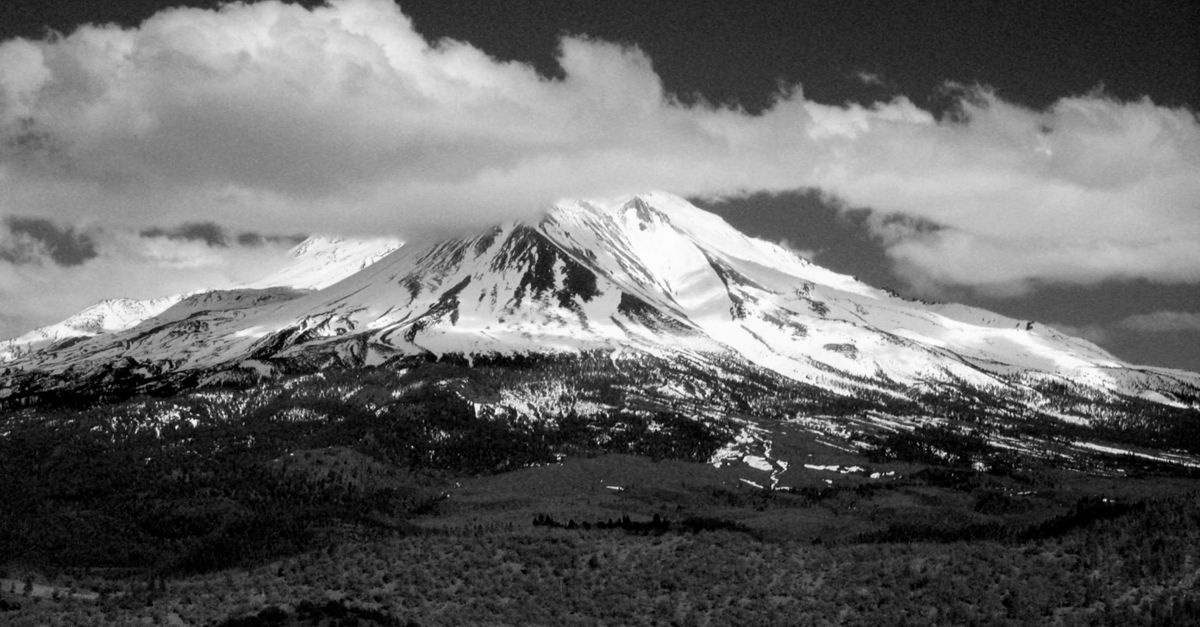
Mount Shasta dominates the California wilderness, a peak that scrapes clouds and catches eyes from fifty miles away. But calling it merely a mountain misses the point entirely. Mount Shasta is an active volcanic system, specifically a compound stratovolcano. The United States Geological Survey classifies it this way because the mountain built itself through repeated eruptions over at least 600,000 years, layering multiple cones that grew, collapsed, and grew again.
The Classification That Defines the Mountain
A stratovolcano is the classic volcano shape most people picture, steep sides rising to a symmetrical peak, built up by layers of lava flows and pyroclastic material. Think of Mount Fuji in Japan or Mount St. Helens before its 1980 collapse. These are the mountains that explode catastrophically and generate the most dramatic hazards.
Mount Shasta fits this broad category, but the "compound" designation adds nuance. Where a simple stratovolcano grows from a single central vent over a relatively short geological timeframe, a compound volcano accumulates through multiple discrete centers of activity that shift position over time. Each new cone may partially bury its predecessors, creating a layered complexity visible only in cross-section or topographic analysis.
This distinction has practical implications. A simple cone erupts from one location with predictable patterns. A compound system like Shasta has erupted from at least four major centers across its history, meaning future activity could occur from any of these zones rather than simply from the summit crater. This multi-vent behavior makes hazard planning more complicated and makes the mountain more interesting to volcanologists who study how magmatic systems evolve over deep time.
The Four Cones: A Geological Timeline
Mount Shasta did not grow all at once. The mountain visible today represents the most recent phase of construction, built atop the remnants of earlier cones that have been largely buried or eroded. Geologists have identified four major eruptive centers that define the mountain's compound architecture.
Sargents Ridge represents the oldest identifiable cone within the current edifice, formed during the late Pleistocene epoch between roughly 200,000 and 250,000 years ago. This cone sits on the mountain's southern flank, partially buried by younger materials but still recognizable as a distinct structural feature. Erosion has exposed its internal layering, providing scientists with a window into early Shasta volcanism that remains incomplete at the summit due to burial by later cones.
Misery Hill formed after Sargents Ridge, growing as the main summit cone during a period roughly 100,000 to 130,000 years ago. This cone built the mountain to near its current height and configuration, creating the classic pointed summit that dominates the skyline. The Misery Hill eruptions produced the majority of the mountain's current mass, though this cone has itself been partially modified by later activity.
Shastina is perhaps the most visually distinctive of the four cones, forming as a subsidiary peak on the western flank of the mountain. This cone is the youngest of the major edifices at approximately 9,000 to 10,000 years old, making it barely a geological infant compared to the older cones. Shastina rises as a secondary peak to 12,330 feet, creating the double-summit appearance visible from the west and south. Its relative youth means less erosion, and its steep-sided morphology reflects its recent construction.
Hotlum cone occupies the northern flank and is the most recently active of the major centers, with eruptions occurring within the last 8,000 years. Some evidence suggests Hotlum may have produced activity within the last 200 to 300 years, placing it squarely in the realm of potential future hazard. The Hotlum cone is partially buried by Shastina on its southern margin, illustrating how the youngest cones can overlap and obscure their predecessors.
The Chemistry of Eruption: Andesite and Dacite
Mount Shasta's magmatic system produces lava with a specific chemical signature that influences eruption behavior. The dominant compositions are andesite and dacite, volcanic rocks named for the Andes Mountains where similar rock types are common and dacite for the Dachi mountains in Japan.
Andesite lava is intermediate in silica content, roughly 52 to 63 percent, which gives it intermediate viscosity. It flows less freely than basalt but more readily than rhyolite, allowing it to build the steep-sided cones characteristic of stratovolcanoes. Andesitic lava tends to pile up near its vent rather than flowing far, constructing the mountain's form layer by layer.
Dacite appears more rarely at Shasta but carries significant hazard implications. With silica content between 63 and 68 percent, dacite lava is much more viscous, potentially trapping volcanic gases in ways that lead to explosive eruptions. The 1915 eruption of Lassen Peak, another Cascade dacite volcano, demonstrated the explosive potential of this rock type when a dacite dome collapsed and generated pyroclastic flows.
The magma feeding Shasta's various cones has varied slightly in composition over time, with the shifts potentially reflecting changes in the underlying magmatic system. These chemical variations provide clues about the depth and persistence of the magma reservoir feeding the volcano.
Pyroclastic Flows and Explosive History
The compound structure of Mount Shasta is not merely a curiosity. It reflects a violent history of explosive eruptions that deposited ash and pumice across the surrounding landscape. Pyroclastic flows are superheated clouds of gas, ash, and rock fragments that race down volcanic slopes at highway speeds, and they have occurred multiple times during the mountain's construction.
The most voluminous explosive events at Shasta produced deposits that extended tens of miles from the source. Geologists studying the surrounding terrain find layers of volcanic ash and pumice that correlate with specific cone-building episodes, allowing reconstruction of eruption chronology even where the source cone has been buried or eroded.
These explosive events occurred primarily during construction of the Misery Hill cone, which appears to have been the most volcanically active phase in the mountain's history. The Hotlum cone has also produced pyroclastic activity, with some deposits dating to roughly 9,400 years ago suggesting significant explosive events in relatively recent geological time.
The persistence of this explosive behavior distinguishes Shasta from less eventful volcanic neighbors. Where some Cascade volcanoes produce primarily effusive eruptions of fluid lava, Shasta's intermediate magmatic composition predisposes it toward more explosive styles when conditions allow rapid gas release.
Compound Structure Versus Shield Volcanoes
Understanding why Shasta's compound nature matters requires comparing it to other volcanic architectures, particularly the shield volcano form common in the Cascades and other volcanic regions.
Shield volcanoes, exemplified by Hawaii's Mauna Loa, build from fluid basaltic lava that flows readily across vast distances. The resulting structure spreads broadly with gentle slopes, rising to relatively modest heights despite enormous volume. Mauna Loa is the largest single mountain on Earth by volume, yet its peak rises only 13,100 feet above sea level because it spreads across hundreds of square miles.
Mount Shasta demonstrates the opposite approach. Its andesitic lava does not flow far from its vents, building steep-sided cones instead of broad shields. The mountain rises dramatically from a relatively small base, reaching 14,180 feet, over a thousand feet higher than Mauna Loa, despite containing far less total volume. Shasta's estimated volume of approximately 108 cubic miles still makes it one of the largest Cascade volcanoes, but it concentrates that mass vertically.
The compound nature adds another layer of distinction. While shield volcanoes may grow from multiple vents, they generally maintain a coherent edifice that grows predictably. Compound stratovolcanoes like Shasta shift their eruptive centers, partially burying old cones and building new ones, creating the complex internal architecture that makes detailed study both challenging and scientifically rewarding.
Cascade Comparisons and Context
Mount Shasta is not alone among Cascade volcanoes in its compound nature, but it represents an extreme example of the type. Neighboring peaks offer instructive comparisons.
Mount Rainier, the tallest Cascade volcano at 14,410 feet, also exhibits compound structure with multiple summit cones built over a similar timeframe. However, Rainier's primary hazards today stem from its glacial systems and hydrothermal weakening rather than the explosive volcanism that characterizes Shasta's history.
Mount Hood in Oregon shows evidence of multiple eruptive centers over its roughly 500,000-year history, though its recent activity has been less voluminous than Shasta's. The comparison illustrates how compound stratovolcanoes across the range share similar architectural approaches while differing in their specific eruptive histories.
Mount Shasta's volume, estimated at 108 cubic miles, ranks it among the most massive volcanoes in the contiguous United States. Only Mount Rainier approaches this scale in the Cascades, and no other peak in the range approaches Shasta's combination of height, mass, and documented explosive history.
Why This Structure Fascinates Volcanologists
The compound architecture of Mount Shasta provides scientists with a natural laboratory for studying how volcanic systems evolve over hundreds of thousands of years. Each buried cone represents a frozen moment in the volcano's history, a snapshot of how the magmatic system behaved during a particular era.
The mountain's youth relative to many geological features also makes it valuable for study. The relatively fresh surface expressions of Shastina and Hotlum allow detailed mapping and analysis that would be impossible on more heavily eroded peaks. Every band of ash, every exposed lava flow, every glacial valley cut into the mountainside represents data about how this volcanic system operates.
For the communities surrounding Shasta, including those who visit the hot springs that draw their warmth from the same volcanic system that built the mountain, this scientific interest carries practical implications. Understanding the compound structure helps geologists model potential future eruptions, identify which zones might reactivate, and prepare appropriate response strategies.
Mount Shasta will not remain dormant forever. When it next awakens, it will likely erupt from one of its four major centers or perhaps from a new location between them. The compound structure ensures that prediction remains uncertain and that the mountain will continue teaching geologists new lessons about how complex volcanoes grow, collapse, and rebuild over geological time.